Healthy Plants vs Plants That Make Us Healthy
The most common question I am asked is about soils for wicking beds. That’s as it should be, because soil is the most important factor in ensuring wicking beds work properly. Let me start by saying that I am not interested in growing healthy plants. I am interested in growing plants that make people healthy — this is not nit-picking over words as there is a fundamental difference.
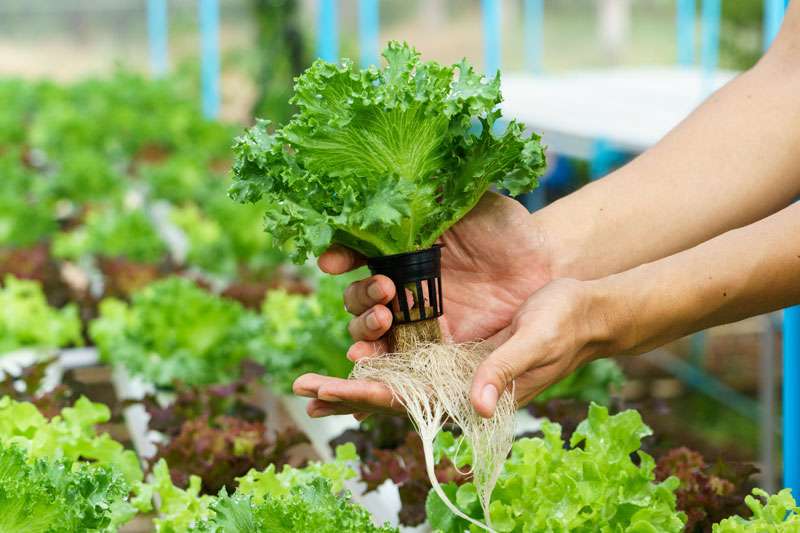
Hydroponics can grow really healthy plants: they look great, are clean and pest free, and with the right nutrients can be nutritious. It is a tribute to technology that such quality looking plants can be grown from purely synthetic chemicals — but they may not be the healthiest for us. Many wicking beds are very close to hydroponics, with inert stones for the water reservoir, manufactured soils for the growing medium and chemical fertilisers. The fact is that many wicking bed growers are very happy with this system — but they may be missing out on the potential health benefits.
Why Are Elderly Chinese So Healthy?
I recently visited rural China — one of my aims was to understand why so many elderly Chinese are so fit, healthy and energetic into their eighties and nineties.
I learned a lot from this trip — but as often happens in life, the more you learn the more confused you get as the bits of the jigsaw don’t quite fit together.
I asked many Chinese why they thought it was that so many elderly people were so fit and healthy. A very common answer was the warm and friendly social support structure. I could see this for myself talking to elderly people in their gardens, growing crops for their families — they seemed very contented people.
I could easily understand that this would make people want to live longer. But how should that actually help them live longer? Surely there must be some physical mechanism rather than some mystical or transcendental effect.
The facts were staring me in the face — there are so many fit and healthy elderly Chinese that there has to be some underlying mechanism rather than a simple ‘feel good’ effect.
Crude Energy Balance vs Intelligent Control
Maybe we have been thinking about diet in too simplistic a way — like our bodies are some sort of machine we pump food into and it chugs away in a totally automatic way.
Anyone who has studied diet and health will be aware of the ongoing battle between the various camps — high fat, high carb, etc. — often by highly qualified medical experts with a lot of data on both sides, yet still violent disagreement.
Despite it being painted as the devil, we actually need sugars for energy. Our bodies can make sugar from carbohydrates, which are produced so cheaply by modern agriculture there does not seem much point in home growing. Our bodies are continuously replacing most of our organs — we are not the same people we were a couple of months ago — we have been largely replaced. For this we need protein, and again the supermarkets provide this at unbeatable prices. This reference is one of the more sensible ones on diet — they recommend one third carb, one third protein and one third fat.
But the real problem is that we are looking at the problem the wrong way. Our bodies are not some dumb machine which we pump food into. This leads to silly conclusions such as “if we eat too much we automatically get fat.” Some people eat very little and still get fat, while other skinny people try really hard to put on a bit of weight but still stay skinny.
Guts, Brains and Intelligence

Maybe we should be recognising that our bodies are really an intelligent system, controlled by a complex web of nerves and hormones. If we want to eat healthy, we should look to a diet (and lifestyle) which affects our intelligent control system.
This article is about soil — not diet — but if we want a healthy diet there are two things we need to incorporate into our soils.
Soil Biology
Soil biology is important for both the plants and us. Plants can only take up nutrients that are in solution; soil biology transforms otherwise inaccessible minerals into solutions which can be taken up by the plants.
But the plants themselves will be full of biology, some of which will end up in our guts and help maintain a healthy, intelligent gut. This gut system controls our bodies (particularly appetite and desire for certain foods) and helps keep us healthy.
That is, as long as we don’t go and kill them off by:
- Long storage times (eat fresh — pick and eat).
- Excessive washing in acidic washes (like many supermarkets do), and,
- Excessive cooking. (Some cooking may be required to release nutrients, but excessive cooking is a big no-no).
Minerals
We also need a whole range of trace minerals and minor compounds, which are deficient in our modern diet, so they should be the target for home growers (or hopefully enlightened commercial growers who I would love to see take up real wicking beds).
We need a much wider range of minerals than plants and more of some of the ones (like magnesium) we both need. For example, we need molybdenum and chromium to transport sugar from our blood, and selenium is another mineral essential for humans.
Volcanic Rock Dust
Volcanic rock dust is the cheapest source of these trace minerals, but it is often only sold by the truck load. There are, however, plenty of commercial supplies with specifications of what minerals are included. This needs checking, as they don’t all contain the full spectrum. Look for chromium and selenium as good indicators — they should all contain the common ones like calcium, magnesium, molybdenum, etc.
If you like doing things the hard way you can of course bore a hole 20k down into the earth’s mantle and make your own volcano — but check with the neighbours first.
The Complexity of Micronutrients and Phytochemicals
If, like me, you follow the literature on diet and health (set up a Google Alert), you will — hopefully not like me — be totally overwhelmed by the almost never-ending number of specialty compounds, vitamins, and hormones our bodies need to be healthy.
Every month I read about some new essential compound. I have just been reading about the discovery of zonulin, which is linked with leaky gut syndrome. But there are so many others, such as serotonin — the happy hormone — which is produced by our gut bacteria.
How do we ensure we get enough of these critical compounds? We can’t take pills for all of them, so we need to look at how they are produced naturally.
Not everything natural is automatically good — there are plenty of things in nature that can harm us — but we can learn from how nature helps us and apply that knowledge.
How Nature Helps Us Be Healthy
Some soils are naturally good, others are bad. The best soils come from volcanic rock, but river silts also lead to good soils.
Fun of Funghi
The rocks or rock particles have a broad spectrum of minerals, but that is useless to plants as they can only absorb minerals in solution. That is where fungi come to play: they have very fine hyphae which create very high pressures and enzymes that dissolve the rocks to form a solution which they pass onto plants.
The plants pay the bill by providing the fungi with sugars which feed them and provide the raw material for the enzymes.
Plants produce the carbohydrates and proteins which provide our bulk food, plus a whole range of phytochemicals which our bodies need either directly or to use as raw materials for other essential compounds — often produced by our gut bacteria.
Plants feed soil bacteria which can attach to the plants we eat and so help top up our essential gut bacteria.
There is a continuous supply chain from raw minerals to the complex compounds that make us healthy. Soil is an integral part of this supply chain.
Creating Wicking Bed Soil
Generally, we have to use soil which is readily available either on site or locally purchased.
Unless you are very lucky with your soil, just shovelling local soil into a wicking bed won’t work (at least not well). Some people think they need stones and cloths to get the needed water holding capacity, but if the soil is processed properly, it will hold more water than stones and have much better wicking properties.
We should add any needed macro and micro nutrients. This is well established, so apart from emphasising the need for trace minerals, I will assume this is known.
Master Mix
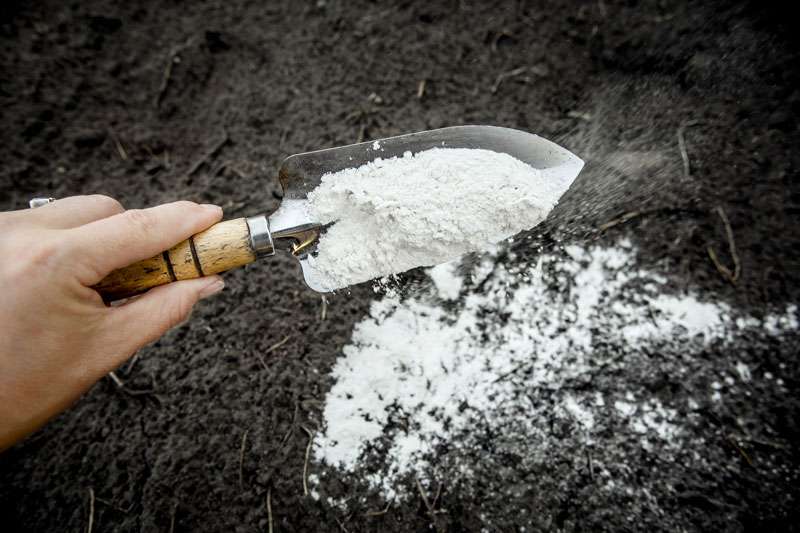
For interest — I make up a master mix of equal parts gypsum, dolomite, organic manure-based fertiliser, blood and bone, and trace minerals. I use so much gypsum and dolomite because my soil is such a heavy clay, but it is still a good way of getting calcium and magnesium into your soil.
With a new bed I would add about 10% of this master mix to the total soil and top up later as necessary.
Releasing Nutrients
Simply adding minerals is not enough — we have to create the right texture with plenty of pore space and good wicking properties (hydrophilic), and also ensure there is an adequate concentration of fungi and other micro-organisms to make the minerals available to the plants.
The oil in gum leaves is particularly prone to making the soil hydrophobic so it does not wet.
Create the Soil Structure
We need both micro and macro biology to create the needed soil structure. These processes occur naturally over time — we just need to accelerate the process. Soil is not manufactured; it is “grown” naturally by the micro and macro soil biology. Just one crop cycle will dramatically improve a soil, but the soil will continue to improve over time. How you “grow” your soil depends on your local conditions, e.g. climate and base mother soil type. I am blessed with a good climate and cursed with terrible heavy clay.
This is why I use so much gypsum and dolomite. But again these need the microbiology to coat the particles so they coagulate and form the nice tilth of good soil.
The Soil Cycle

Soil is made by a cycle: plants grow, taking carbon from the atmosphere to form the mass of the plant. The roots exude sugars which feed fungi and the soil microorganisms, which will further feed on the roots as they die back. As the roots decompose, they form a network of channels through the soil creating both pore space and wicking channels.
My preferred method of “growing” soil is to use a patch of near virgin ground which will be full of biology, but using a sponge or open wicking bed works well.
It can also be done in a closed wicking bed, but because there is no contact with the parent soils it may be necessary to use an inoculant containing the starter biology. Biology duplicates rapidly, so a little inoculant goes a long way.
Selecting Plants for Growing Soil
All plants will contribute to growing the soil. I am a disorganised sort of person, so I keep my seeds in a big tub and often have a spill. When it comes time to grow soil I will use this assorted mix as part of my seed pack.
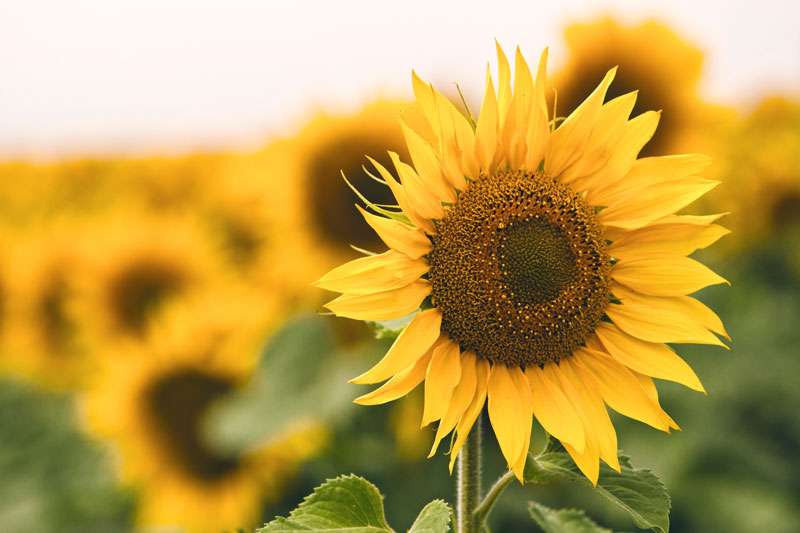
But as almost everyone is more organised than me, I suggest a mix of oats, clover, lucerne and sunflower. Sunflower is really good at attracting mycorrhizal fungi; oats form a really nice dense root system, while the legumes encourage desirable bacteria.
I go for a shortish growing period — basically let the sunflower bloom, then I mow them all down and set aside the mowings to make material for composting.
I dig up the roots, which should be pretty massive and dense, and put these into the base of the new wicking bed. Roots have been evolving for millennia to have good wicking properties — far better than stones — and they also create a very high void space.
You can easily measure void space by weighing a known volume (ice cream container), then filling it with water and reweighing. A good wicking bed soil will have a void content of around 50–60%. You can make it higher by adding vermiculite, which is porous and holds virtually its own volume of water.
This root mass is a great material for the base but is too coarse for seeding, so I will cover with about 100mm of fine soil.
The only disadvantage of this method is that over time the organic material will decompose, so the bed will need topping up. I like to cover the top of the soil with mulch or compost and have plenty of worms which come up from deep in the soil at night and draw down the mulch.
A Word on Composting
Gardening books always recommend using fully matured compost. There are two reasons: the nutrients are fully available, and some plant growth inhibitors can be released during decomposition.
I have no arguments with this logic, but I am trying to grow bacteria in my soil — particularly the first stage or mesophilic bacteria. There is a special name for partially composted material: labile.
My interest is in growing soil biology which will end up as gut bacteria, so I use labile compost (partially composted organic material).
It may be against the books, but I find it works. You may like to give it a go, but I suggest moderation until the bacteria is well established.