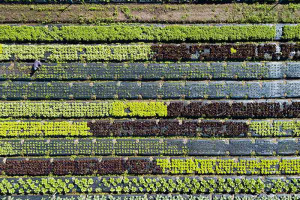
Micro flood irrigation is a low-cost, high-efficiency way to water plants without the usual problems of under-watering, over-watering, salinity build-up, and nutrient run-off. It works by applying water quickly to a small area, then stopping so the water can soak in and the soil can “breathe” as fresh air is drawn down. The approach mimics productive spring showers, improves water distribution, and can lift yields using the same water supply.
What Micro Flood Is and Why It Matters
Micro flood was developed as an efficient, low-cost way to deliver water to plants without the common irrigation mistakes of applying too little water (so the surface evaporates) or too much water (so it drains past the roots and carries nutrients with it). In its simplest form, the system works under gravity using small volumes of water and thin-walled, low-cost pipe. That makes it especially useful where water supplies are limited and soils are porous, because in those conditions many higher-cost irrigation systems become economically unrealistic.
While low cost is a major feature, micro flood was designed for horticultural performance first: to apply water in the most effective way for plant growth while minimising environmental damage from irrigation, particularly salinity and nutrient run-off. The system works by saturating the upper layer of soil quickly over a small area so water spreads evenly across the surface. Then, as water soaks down, it pulls fresh air into the soil profile. The result is well-aerated soil with moisture where roots can use it, rather than waterlogged zones and dry zones in the same crop.
What This Manual Helps You Do
The operating approach is practical. It supports the full workflow from estimating the land area you can irrigate with available water, through layout planning and selecting components, to setting irrigation schedules and monitoring performance. It also explicitly considers environmental impacts (especially salinity) and the social realities of water allocation and community equity. The system has been shaped by experience in Australia and in development contexts, including field experience through World Vision Ethiopia’s Humbo Area Development Program.
Why Irrigation Is Harder Than It Looks
Irrigation is not just “watering plants”. The real challenge is achieving three outcomes at the same time: (1) an optimum moisture level, (2) an optimum nutrient concentration, and (3) adequate aeration. If the soil is too dry, plants cannot access the nutrient solution. If the soil is too wet, roots lose oxygen and growth slows. If nutrients are too diluted by excess water, plants must transpire more water just to obtain enough minerals, which increases water wastage and can still reduce growth. If nutrients become too concentrated (often when water is scarce), osmotic pressure can pull water out of the plant and cause stress.
The reason spring showers often produce dramatic growth is not luck. It is mechanics. Short, sometimes heavy bursts wet the soil, then sun returns, then another shower arrives. Different showers wet to different depths, which means there is almost always a soil layer close to the ideal moisture level. Just as importantly, the wetting and draining cycle acts like breathing: water pushes stale gases out of the soil, and as it drains or is used, fresh air is drawn down into the profile. Roots need water, but they also need oxygen and a way to flush growth-inhibiting gases such as carbon dioxide and ethylene. Cyclic wetting supports that exchange.
How Water Actually Moves in Soil
Water does not “magically redistribute itself”. It moves according to physics, and that is where many irrigation methods fail. Gravity is always pulling water downward. When soil becomes saturated it can form a column of water that develops pressure (hydraulic head), forcing water through the easiest pathways and often creating deep penetration near the inlet. Surface tension works differently: it attracts water to small pores and can resist drainage, and may cause slow lateral movement. Other mechanisms such as evaporation/condensation within the soil, osmotic movement, and even redistribution by roots are real but very slow compared with the speed at which irrigation water is typically applied.
A simple observation illustrates the point. If water is applied very slowly at a point (like a drip), the wetted circle may not expand much, even if you run it for a long time; it often just goes deeper. If water is applied rapidly (like a flash flood), the surface saturates and water can move across the surface before infiltrating, giving a wider spread. There is a practical limit to how far water will travel across the surface before infiltration absorbs it; this is the equilibrium flow length. Good irrigation design keeps run lengths well under this equilibrium length so distribution stays uniform.
The Problem With Flood and Drip (And What Micro Flood Fixes)
Traditional flood irrigation has one basic flaw: it controls horizontal flow (water spreads across the bay), but it cannot control depth. Near the inlet, soil becomes saturated long before the water reaches the far end, so water penetrates too deeply, can pass below the root zone, and may mobilise salt. Plants near the inlet suffer from over-watering, and plants near the far end suffer from under-watering. Flood irrigation also tends to require long irrigation times and large channels, which increases seepage and evaporation losses. The wet-dry cycle is often too extreme: plants grow well only in the middle of the cycle, then slow down when soil is waterlogged at the start or too dry at the end.
Drip irrigation flips the problem: it can control depth (by managing volume), but it has poor control over horizontal spread. Water applied at a point forms a wetted volume, and running longer often increases depth more than width. The shape changes with flow rate and soil type, but the key limitation remains: a point source does not naturally create a uniform moisture field across the root zone.
Micro flood is designed to avoid both failures. It uses high flow for short periods over small areas, so water spreads across the surface first, then infiltrates. This improves uniformity, keeps moisture nearer field capacity without long periods of saturation, and supports the “soil breathing” effect that spring showers provide. Typical irrigation times are short (often 10 to 30 minutes depending on soil and root depth), yet meaningful water is applied (commonly around 5 mm per irrigation) more frequently, daily or every few days. This stabilises soil moisture and can significantly improve production while using the same water supply.
Micro Blocks and Sequential Irrigation
No farm can irrigate its entire area in ten minutes because the flow rate would be impossibly large. Micro flood solves this by dividing the farm into small areas called micro blocks. Each micro block is irrigated in turn. The system uses automatic switching (valves) to move flow from one micro block to the next. The concept is simple: apply water rapidly to one micro block, stop, let it soak in, and then move to the next block. Over time, the whole field is irrigated with short, intense applications that mimic natural rain pulses.
Timing and flow are the essence of the method. Short irrigation time controls depth. High flow spreads water across the surface. The “off” period is not wasted time; it is when infiltration and aeration do their work. Different soils need different run times. Sandy soils often need shorter times to avoid water moving beyond shallow roots. Clays can tolerate longer runs because infiltration is slower, allowing spread before deep penetration.
Micro Block Layouts for Different Crops
Row crops: For orchards and trees, rows become micro blocks. Each row has its own irrigation line with one or more emitters per tree, but only one line is irrigated at a time. The emitters are high-flow compared to conventional drippers, creating a flash flood effect over a wide circle (often up to a couple of metres in diameter). For large trees, a ring around the base that floods evenly can be superior to point drip because it waters more of the active root zone.
Pastures: Pasture fields can be split into bays and then into micro blocks. Each micro block is irrigated in turn until a bay is complete, then the system switches to the next bay. The flow to each micro block can be similar to traditional border check irrigation, but it is a flash flood rather than a deep flood. Larger areas can be irrigated by using multiple bays connected by lines with risers so the system advances automatically. Where livestock graze, pipes should be buried and tough enough to resist damage.
Vegetables: Vegetable blocks are typically shallow rooted and often require smaller blocks and higher flow intensity for very short periods. Fields may be divided into bays and micro blocks, with irrigation lines running across the bay from each valve. Emitters can feed compacted furrows that distribute water efficiently across raised beds. Compacted furrows (formed by pressing rather than trenching) can improve distribution and reduce infiltration losses compared with watering loose, freshly worked soil.
Mixed plantings: In dryland systems, plants are often widely spaced so roots can forage for scarce moisture. Under irrigation, closer spacing is usually more efficient because evaporation losses occur whether plants are present or not. Combining plants with different root depths can also improve water use, for example shallow-rooted vegetables grown with deeper-rooted plants that access moisture lower in the profile.
How The System Switches Automatically
Micro flood can switch water between micro blocks using risers and automatic valves. Risers direct flow into the correct irrigation line by requiring the water to overcome a small head. The simplest approach is an inverted “U” that acts like a threshold. When one line closes, pressure builds and water moves to the next riser.
Tilt valves provide automatic sequencing. A small bleed line slowly fills a chamber during irrigation. When enough water has been delivered, the added weight causes the valve to tilt and squeeze closed a flexible line. The “sloshing” action helps the valve snap from fully open to fully shut rather than half-open, which supports reliable sequencing. The system can still be overridden manually if needed, but the aim is to provide a simple, low-maintenance automatic cycle.
Designing a Micro Flood System
Design starts with water reality. For each field, you calculate total water requirements and average flows based on area, peak evaporation, crop factor, and available run time per day. Once you know average flow, you can size the primary pipe that carries water from the source to the highest point of the field. Primary lines may be gravity fed or pressure fed depending on whether water must be lifted.
Micro block size is set by a practical relationship: micro block area equals available flow multiplied by irrigation time, divided by water applied per irrigation. A common run time is 30 minutes and a common application is 5 mm per irrigation, but these values should be adjusted for soil type and crop root depth. As a guide, sandy loams may suit run times around 10 minutes, heavier loams around 30 minutes, and clays around 60 minutes. Shorter run times are achieved by reducing micro block size or by increasing available flow if that is feasible.
Testing on your soil is critical. A design estimate must be checked by running water onto the soil and observing: does the water spread over the surface for the required length in the required time without infiltrating too deeply? You then confirm irrigation depth against root depth (for example, shallow vegetables may only need irrigation to around 100 mm on routine cycles). Deeper-rooted plants may be irrigated to about 300 mm routinely, with occasional deeper sequences as needed.
Secondary lines run from the entry point to the highest point of each micro block, typically down the line of greatest slope. Tertiary lines spread water across the block through holes or emitters spaced to match furrows or plant spacing (often around 750 mm in many layouts). Material selection also matters: primary lines are often permanent and may need higher strength, while secondary and tertiary lines can often use low-pressure, low-cost options like layflat pipe, accepting that careful handling is required to avoid damage.
Operation, Scheduling, and The “Dual Cycle” Advantage
Classic irrigation scheduling often uses a single deep cycle: allow soil to dry down to a refill point, then refill the profile. This works, but it does not always produce optimum growth. A more productive method is dual cycle irrigation: periodically wet the entire root profile, then apply a series of smaller irrigations that keep the upper zone moist without saturating the whole profile each time. The surface layer is where many fine feeder roots live and where nutrient availability is often highest. If that layer dries out, plants shift to survival roots deeper down, which may keep them alive but can reduce access to less mobile nutrients like phosphorus and calcium.
Micro flood scheduling often works best when valves are set to deliver a fixed amount of water per irrigation (for example, 5 mm). You then track accumulated evaporation and irrigate when the crop has used enough water to justify another cycle. Crop factor can be refined by monitoring applied water, evaporation, and soil moisture on the actual site, rather than relying only on generic crop factors that may not match local conditions. For deeper-rooted crops, the dual-cycle method alternates occasional “profile refill” sequences (often achieved by multiple micro flood cycles) with a set of smaller irrigations that maintain topsoil moisture and aeration.
Environmental Reality: Salinity and River Management
Irrigation inevitably reduces flow in river systems and can create conflict between irrigators and the wider community. The manual makes a practical point: a key reason irrigators should care about system-wide management is that salinity can destroy productive land. All irrigation water contains dissolved salts, even if the levels are low. As irrigation water evaporates, salt remains and concentrates in soil. If salt is not removed, soil becomes less productive and can eventually become unusable.
Managing this requires deliberate flushing, not random over-watering. First, a flushing flow must move salt from the irrigated land into drainage and back toward the river system. Second, the river system must have adequate flow to transport that salt onward, otherwise it can cycle back to irrigators downstream and amplify the problem across a whole catchment. This is not abstract environmentalism; it is a long-term productivity issue for farming regions. The manual notes that software tools were developed to help calculate effective flushing cycles and scheduling methods.
Social Reality: Water Is a Community Asset
New irrigation schemes often begin with enthusiasm and incentives, but the long-term social impacts can be overlooked. If water is supplied at very low cost and poorly regulated, inefficient practices follow, and resentment builds over time. People without water access feel disadvantaged, and communities can see environmental damage while a subset of irrigators benefit. Later, when restrictions become necessary (often to manage salinity and river health), irrigators can resist because they have become accustomed to low-cost, abundant water.
The manual’s position is straightforward: water is communal property. Even when rain has “no cost”, water can have very high value. Pricing and policy should recognise that water is supplied to irrigators not only for private gain, but so they can produce food for the community and maintain land productivity over time. That implies responsibilities for scheme managers: educate irrigators, set rules that protect the system, and ensure revenues and policies benefit the community as a whole rather than encouraging short-term extraction that leads to long-term decline.
The Practical Bottom Line
Micro flood irrigation aims to deliver what plants actually need: moisture at the right depth, nutrients at usable concentration, and oxygen in the root zone. It does this by applying water rapidly to small areas for short periods, then pausing so infiltration and aeration can occur. Compared with long-run flood irrigation or point-source drip, it improves distribution, supports “soil breathing”, reduces deep drainage losses, and can lift production from the same water supply while lowering environmental risk. It is not just a technique; it is a way to think about irrigation as a controlled cycle that supports plant biology, soil physics, and long-term catchment health.
Download “Micro Flood Irrigation: A Practical Way to Grow More With Less Water” (full PDF)