This article examines the contrast between Australia’s increasingly proactive water policy and the far less convincing response to global warming. While there is growing recognition that water must be managed at a national level, climate change policy remains cautious and reactive. The piece argues that global warming demands a dual response: long-term emissions reduction and immediate adaptation using technologies suited to Australia’s arid reality.
The current Federal Government has taken a more proactive stance on water policy in recent years. There now appears to be a clear acceptance that water is a national issue and that the Federal Government must play a leading role. The proposal to assume greater control of the Murray–Darling Basin is particularly welcome, as it recognises that water systems do not conform to state boundaries.
However, if water is acknowledged as a national concern, it raises an obvious question: why stop there? Water policy cannot be separated from the broader environmental forces that shape availability and reliability, especially global warming. Treating water reform in isolation risks solving yesterday’s problems while leaving tomorrow’s challenges unaddressed.
Global Warming: Words Without Conviction
When it comes to global warming, the tone and substance of government policy are strikingly different. It is clear that climate change is recognised as an important political issue, particularly in the lead-up to elections. There is a noticeable effort to use the right language and signal concern. Unfortunately, this often appears to be more about presentation than genuine commitment.
The result is a great deal of rhetoric but little sense of urgency or clear direction. While public statements acknowledge the issue, they are frequently cautious, qualified, and lacking in the conviction needed to drive meaningful change. This creates the impression that global warming is being treated as a political problem to be managed, rather than a physical reality that must be confronted.
A Double-Barrelled Response
Global warming and climate change demand a double-barrelled approach. The first barrel is long-term emissions reduction. There is no question that greenhouse gas emissions must be reduced, and this must occur as part of a coordinated global strategy. Australia, as a developed nation and significant per-capita emitter, has both a responsibility and a strong interest in being an active participant in this global effort.
Emissions reduction, however, is only half the story. Even if the world were to dramatically cut emissions today, the effects of global warming already set in motion would continue for decades. The climate system responds slowly, and much of the change we will experience is already locked in. This reality is often downplayed in public debate, but it has critical implications for policy.
The Need for Immediate Adaptation
The second barrel of the response is adaptation. There is nothing that can be done in the short term to avoid many of the impacts of global warming. More intense droughts, altered rainfall patterns, and increased pressure on water resources are inevitable. What can be done, and must be done urgently, is to adapt our systems so we can live with these changes.
This means developing and adopting strategies that allow agriculture, cities, and communities to function under more variable and often harsher climatic conditions. Adaptation is not an admission of failure; it is a recognition of reality. Ignoring this need simply increases future costs and risks.
Australia’s Arid Reality
Australia is, and always has been, largely an arid continent. Despite this, much of our water infrastructure and management philosophy has been imported from wetter climates. Large dams, centralised systems, and assumptions of relatively stable rainfall are poorly suited to an environment characterised by extremes and variability.
As the continent becomes even more arid under climate change, the mismatch between our technologies and our climate will become more severe. Continuing to rely on approaches designed for wetter regions is increasingly untenable. What is needed is a deliberate shift toward arid-zone water technologies and management practices.
Adopting Arid Climate Technologies
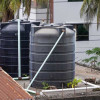
Arid climate technologies focus on capturing rainfall where it falls, minimising evaporation, recycling water locally, and making far more effective use of limited supplies. These approaches are typically smaller in scale, decentralised, and more resilient to variability than large, centralised systems.
The tragedy is that many of these technologies already exist, yet adoption has been slow. Institutional inertia, attachment to traditional infrastructure, and a reluctance to rethink established practices all play a role. As climate pressures intensify, delay becomes increasingly dangerous.
Time Is the Critical Factor
The central issue is time. Emissions reduction will take decades to produce measurable climatic benefits. Adaptation, on the other hand, can deliver resilience much sooner if pursued seriously. Australia has the opportunity to lead by recognising this distinction and acting accordingly.
Water policy has begun to move in the right direction by acknowledging the need for national leadership. Climate policy must now catch up by embracing both mitigation and adaptation with equal seriousness. Failing to do so risks leaving Australia exposed to the full force of climate change without the tools needed to cope.
Global warming is not a distant or abstract threat. It is already reshaping the conditions under which water must be managed. A credible government policy must reflect this reality, moving beyond words to practical action that prepares the nation for a drier, more uncertain future.
Colin Austin — © Creative Commons. Reproduction permitted for private use with source acknowledgment; commercial use requires a license.