This article introduces what I believe is the next major revolution shaping human health and survival: gut biology. While technology has transformed manufacturing, transport, and communication, it has also created deep social and environmental stress. At the same time, modern food systems have stripped food of minerals, phytonutrients, and living biology. By reconnecting soil, food, and gut health—especially in urban settings—we may unlock a practical path toward better health, resilience, and long-term sustainability.
What Revolution?
When I say “join the revolution,” you might wonder which one I mean. We are surrounded by revolutions: mobile phones that almost work without help from a teenager, self-driving electric cars, solar panels and batteries powering homes, and global communication at the tap of a screen. But the revolution I am talking about comes later in the story. It is the gut biology revolution.
Political events such as Brexit or the election of Donald Trump may look like revolutions, but they are really symptoms. The real revolution is much larger and much deeper. It is driven by technology, economics, and biology colliding faster than our social and political systems can adapt.
A Lifetime Watching Technology Change
I am an engineer by training and started my first job fifty-seven years ago. Factories back then were little more than large garden sheds, filled with hand-operated machines and skilled tradespeople. Productivity was limited by human labour.
Computerised manufacturing changed everything. It did not just make factories more productive; it reshaped global economics. In the past, setting up a factory in an underdeveloped country would have been almost impossible because of the lack of skilled operators.
Globalisation and Education
Computers removed that barrier. Today, manufacturers can install computer-controlled machinery almost anywhere in the world and train people rapidly. Many developing countries have invested heavily in education, producing large numbers of qualified graduates who may lack experience but can quickly adapt.
Lower transport costs, jumbo jets, container shipping, and the internet allow people, goods, and technology to move around the globe with ease. The technical and economic systems are coping remarkably well. The political and environmental systems are not.
Environmental and Social Stress
The political unrest we see today is driven by deep economic inequality. A tiny fraction of the population owns as much wealth as the vast majority combined. Large sections of the working population have been left behind, creating anger and instability.
Environmental stress is even more serious. When I began working, perhaps one billion people lived affluent lifestyles, while several billion lived as peasants. Today we are approaching five billion affluent consumers, and within a short time that number could reach nine billion. The environmental load of that transition will dwarf political stress. I see little evidence that this challenge is being addressed at the scale required. I am not a politician. I am simply a worried observer.
Food as a Core Issue
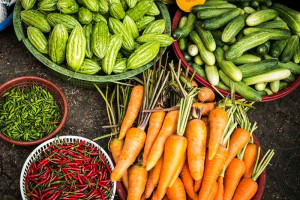
Where I have always been active is food—specifically food that supports health. Modern agriculture is extremely good at producing bulk carbohydrates such as wheat, rice, corn, and oats. It is far less effective at delivering trace minerals, phytonutrients, and living biology.
People often romanticise the “good old days,” but having lived through them, I can say we do not want to go back. Our future depends on technology—just the right technology, managed wisely.
The Next Big Thing
I am a naïve optimist. Technology helped create many of our problems, but the right technology can help solve them. The challenge is identifying what comes next.
Looking at past revolutions is not always helpful. No one living in the age of steam trains could have predicted airplanes. Similarly, predicting the future by extending today’s internet and smartphone trends may miss the point.
The biological revolution may be where the transistor was generations ago. It is emerging quietly, but its impact could be enormous.
A Personal Wake-Up Call
This realisation was sharpened by a personal change. For most of my life I lived on acreage or had a large garden where composting and growing food was easy. For the last fifteen years I lived in an eco-village with over two hundred hectares of land.
With age came a practical decision: we bought a townhouse to prepare for a time when I might not be able to dig holes or manage heavy garden work. This move was a shock. I am a compost enthusiast, and putting grapefruit skins into a council bin felt wrong.
City Living and Sustainability
Only a few days of city living made it clear how unsustainable modern urban life is. My short-term solution was to cart organic waste back to the eco-village, where nothing organic is wasted. But that was not a long-term answer.
I needed to focus my remaining intellectual energy on developing a system that could work on a city block—growing food rich in minerals, phytonutrients, and biology, while recycling as much organic waste as possible.
Buy or Grow?
My wife, Xiulan, spent her working life as a surgeon and is understandably focused on cleanliness. Despite many years of marriage, I have not converted her to composting.
Living in Bundaberg, one of Australia’s prime horticultural regions, fresh produce is cheap and abundant. Why grow food when it can be bought so cheaply? Economics and environmental arguments did not win the debate.
The Case for Growing Food
The first serious argument was minerals. Modern food, even organic food, is often deficient in trace minerals. Plants can survive with minimal minerals; humans cannot.
In my research into diabetes—Xiulan is diabetic—I found that minerals such as chromium and vanadium are essential for managing blood sugar. Supplements are expensive, often poorly absorbed, and rarely balanced. Growing plants in mineral-rich, biologically active soil offers a more complete and natural solution, even if that argument did not immediately win favour.
Gut Biology Changes Everything
The final argument was gut biology. This is an immature field, often messy and poorly understood. The only guaranteed method currently used in medicine is faecal transplant, which is effective but hardly appealing. Surprisingly, gut biology was the argument that succeeded. That created a double challenge: turning organic waste into high-quality soil without smells or flies, and improving gut bacteria through food grown in that soil.
Testing Without a Laboratory
Testing gut biology is difficult. Many microbes die outside the gut, and DNA testing is expensive. This leaves empirical self-testing as a practical approach. This method has precedent. Australian researchers Barry Marshall and Robin Warren used self-experimentation to discover the role of Helicobacter pylori in ulcers, work that earned them a Nobel Prize.
Learning from Dietary Confusion
I have lived through multiple diet fads. When my wife was diagnosed with diabetes, the low-fat craze was dominant. Today we recognise that some fats are healthy. It is disturbing that a single flawed theory can shape global dietary advice for decades. A degree of careful self-testing is not anti-science; it is common sense.
Working Hypotheses
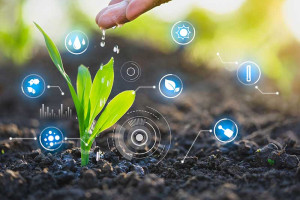
I am developing and testing several hypotheses. The first is that beneficial soil biology can be transferred to the gut by eating freshly harvested plants.
The second is that soil biology needs continuous feeding. This involves experimenting with labile, or fresh, compost supported by inoculants and minerals. Labile compost is biologically rich but can temporarily lock up nutrients.
If that fails, partially matured compost may provide a compromise—still biologically active, but more stable.
Oxygen and Water Cycling
The third hypothesis involves flood-and-drain systems to oxygenate soil. My current test setup uses classic wicking beds combined with controlled flooding and draining to support both soil biology and plant health.
Where This Leads
These experiments are ongoing. The goal is simple but ambitious: to develop practical systems that reconnect soil biology, food quality, and gut health, even in urban environments. If we are serious about health, sustainability, and the future of our species, this is a revolution worth joining.